By Shawn Martin
Short answer: EV charging projects are commonly delayed by utility capacity and service work, drawings that no longer match the equipment ordered, and site conditions discovered late. Assigning each scope to a named party, starting utility intake early and coordinating the layout before procurement reduces those risks. It does not guarantee a particular review time or construction date.
This educational overview covers the planning steps that most often affect the schedule, followed by short local notes. Current requirements for a site should be confirmed with the jurisdiction, the serving utility and the responsible professionals.
Assign every scope to someone
EV charging projects cross several disciplines and contracts. Delays often appear where each party assumed someone else was responsible. Agree on a responsibility matrix at the start; the contracts and the jurisdiction ultimately define each role.
| Party | Responsibilities to confirm |
|---|---|
| Owner | Operating brief, budget, charger count and phasing, network and payment decisions, utility account and authorizations |
| Electrical engineer | Capacity review, load calculations, load-management design, one-line diagrams, panel schedules and electrical drawings |
| Architect or civil engineer | Parking layout, accessible spaces and routes, grading, paving, drainage and site details |
| Structural engineer | Foundations for pedestals, cabinets or pad-mounted equipment, and canopy or wall support where required |
| Installer | Assigned procurement, installation, trenching, inspections, testing and record information |
| Serving utility | Available capacity, utility-owned equipment, metering and the utility’s own design and construction process |
| Network provider | Activation, user access and payment settings, software support and ongoing service terms |
Start utility intake early
If the project may need more capacity, a new meter or a new service, contact the serving utility as early as possible. Utility processes vary, and some steps cannot begin until the utility receives load information and a site plan. The Alternative Fuels Data Center (opens in a new tab) also identifies utility involvement as an early part of charging infrastructure planning. Track the utility application as its own milestone, with a responsible person and a next action.
Keep drawings, equipment and layout aligned
Permit drawings show specific equipment, ratings, mounting and locations. When a different charger model is ordered later, the electrical design, structural mounting or parking layout may need revisions, and revised drawings may need another review. Select equipment, or define acceptable alternatives, before the drawings are finalized.
Confirm that the electrical layout matches the architectural or civil parking plan, including accessible spaces and routes. The U.S. Access Board (opens in a new tab) technical assistance is a useful reference, but the applicable requirements should be confirmed for the project.
Site constraints that change the plan
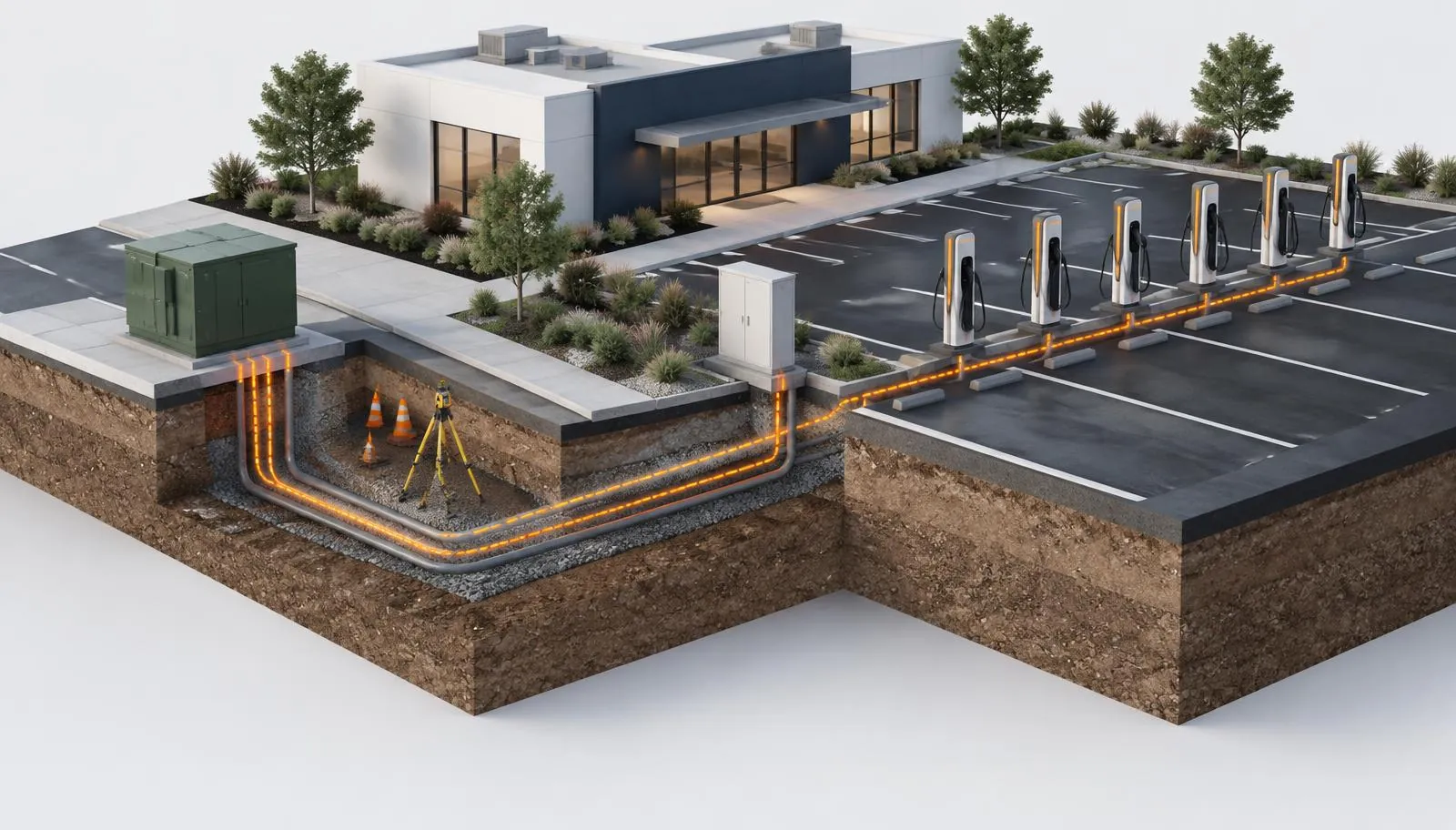
Underground utilities, pavement, landscaping and drainage can change the preferred conduit route. Trenching across an active parking lot may need phasing around tenants or guests. Transformers, switchboards and chargers need working clearances and vehicle protection. Pedestal chargers, cabinets and pad-mounted equipment may need foundations designed for the site conditions.
A utility locate, survey or other site investigation may be needed before the route is final, and field verification is still required during construction.
Procurement before final service specifications
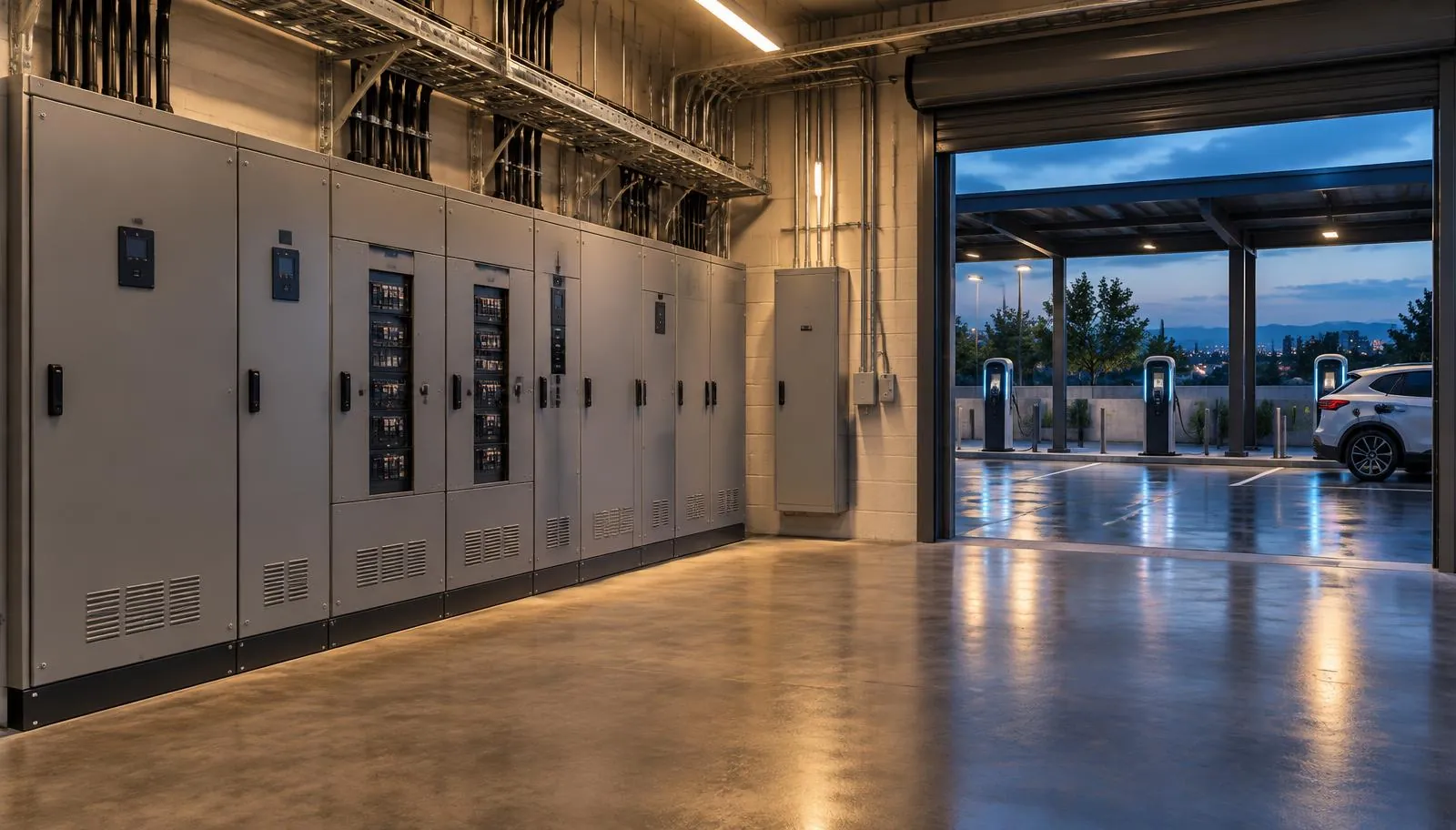
Ordering switchgear, transformers or chargers before the utility confirms service voltage and capacity, or before the design is coordinated, can lead to equipment that does not fit the final design. Long-lead equipment is a real schedule concern, but early orders should follow confirmed specifications. Where early procurement is unavoidable, document the assumptions and who carries the risk if they change.
Inspections, commissioning and controls handover
Inspections follow the permitted scope, and the jurisdiction may require corrections before final approval. Chargers also need activation, network configuration and testing. Where load management is part of the design, confirm that the configured settings match the engineered limits before handover.
Give the owner a record of the final settings, who may change them and what review is required before a change. That record protects the design intent when staff or network providers change.
Local planning notes
These notes illustrate how procedures differ between jurisdictions. They are educational examples, not a complete list of local requirements, and they do not replace confirming current requirements for the specific site.
City of Los Angeles
The Los Angeles Department of Building and Safety provides EV charging resources, including a permit checklist, on its Green Building and Sustainability page (opens in a new tab). Confirm the LADBS permitting path for the specific scope and the serving utility before ordering equipment; a streamlined path for some residential work does not apply to every project.
City of San Diego
The City of San Diego’s Information Bulletin 187 (opens in a new tab) addresses EV charging. Permitting and inspection depend on the scope, and EV-ready infrastructure is treated differently from charger installation, so verify which requirements apply. City procedures apply within the City of San Diego, not across all of San Diego County.
Dallas area
For a Dallas-area site, confirm the actual municipality and serving utility rather than treating the whole metro as one permitting jurisdiction. Each city sets its own permit procedures, and the utility serving the site defines the service request process.
Houston
The Houston Permitting Center (opens in a new tab) is the official source for City of Houston permitting. Confirm that the site is within the city’s jurisdiction, check current submittal requirements and coordinate with the serving utility early.
Plan the next step
Start with Can Your Building’s Electrical Service Support EV Chargers? for the capacity questions, then review our EV charging engineering services. Send your site address, parking plan and available electrical drawings through our contact page.
Frequently asked questions
What usually delays an EV charging project?
Utility capacity and service work, drawings that do not match the ordered equipment, and site conditions found late are common causes.
Can EV charger permits be expedited?
Some jurisdictions offer faster paths for certain scopes. Ask the jurisdiction what applies to your project; complete, coordinated drawings help but do not guarantee a review time.
When should we contact the utility?
As soon as the site may need more capacity, a new service or new metering, usually during early planning and before equipment is ordered.
Who sets the load-management settings?
The engineer defines the limits in the design, the installer or network provider configures them, and the owner should receive a record of the final settings.
Sources and further reading
- U.S. Department of Energy, Alternative Fuels Data Center: EV charging infrastructure development (opens in a new tab)
- U.S. Access Board: Electric vehicle charging stations (opens in a new tab)
- City of San Diego Information Bulletin 187 (opens in a new tab)
- LADBS Green Building and Sustainability (opens in a new tab)
- Houston Permitting Center (opens in a new tab)
- EV Charging for Apartments and Hotels
VizoDesign Engineering Team
Structural and MEP design for buildings and infrastructure nationwide. This article provides general educational information; project requirements must be checked against the applicable codes, jurisdiction and site conditions.