By Shawn Martin
Short answer: it depends on how much capacity is actually available, not on how much room is left in the panel. An electrical engineer compares the building’s existing demand with the proposed charging load using the calculation method that applies to your project, then checks the utility service and every piece of equipment between the service and the chargers. The result may be that chargers fit as planned, fit with managed charging, fit in phases, or need a service upgrade.
This educational overview explains what to check first. The answer for a specific site depends on current requirements confirmed with the jurisdiction, the serving utility and the responsible professionals.
Spare breaker spaces are not spare capacity
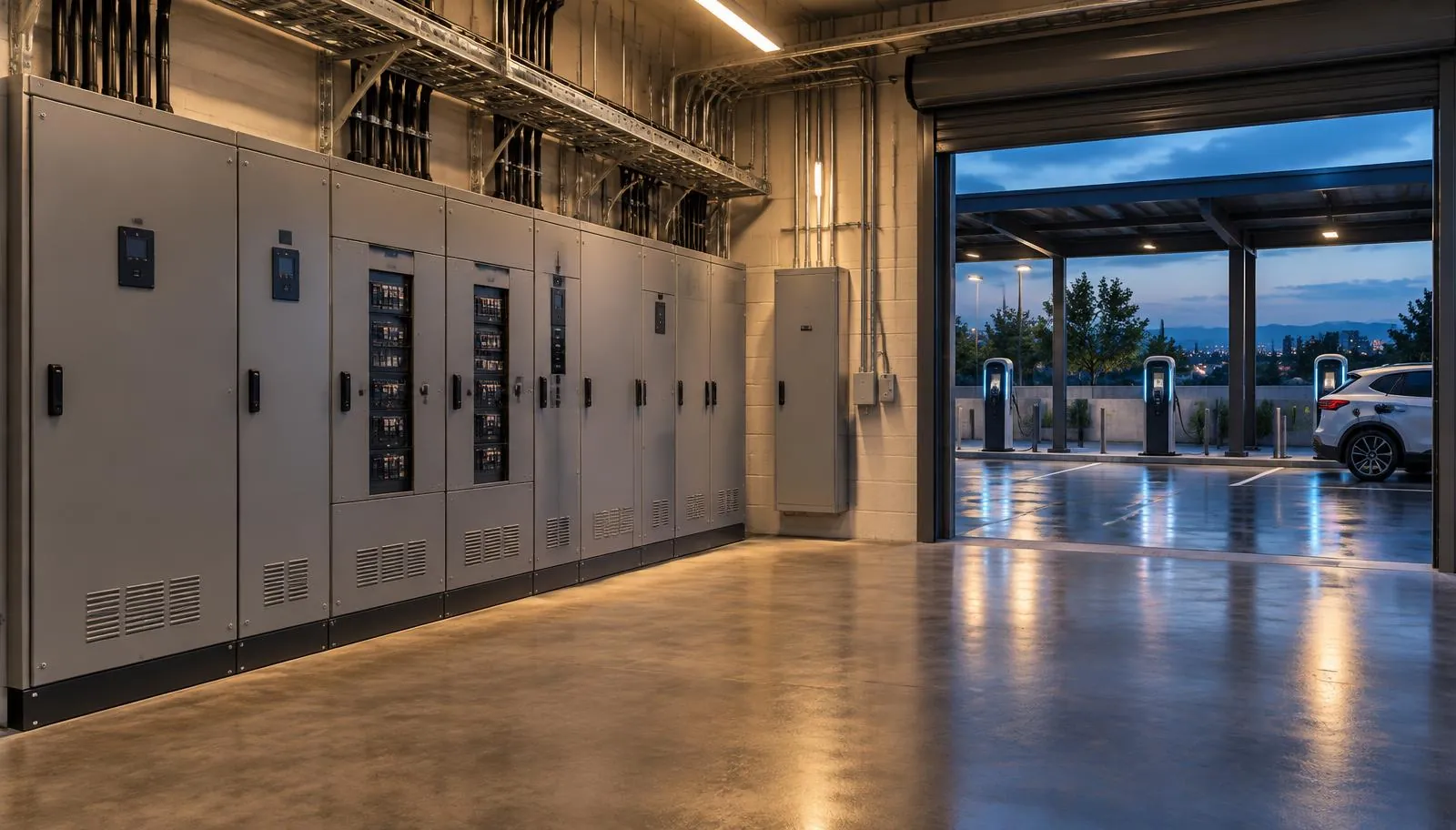
An open slot in a panelboard shows there is physical room for another breaker. It does not show whether the panel, its feeder, the switchboard upstream or the utility service can carry more load. A panel can have several empty spaces and already be close to its limit, or be full of breakers that serve modest loads.
EV charging can run for hours alongside other building loads, so a panel schedule is a place to start asking questions, not a conclusion.
Nameplate rating is not available demand
The rating on the main switchboard is the most the equipment is built to carry. Available capacity is what remains after the building’s existing demand is accounted for by an accepted method. Depending on the applicable code, that may be a load calculation, utility demand data or measured readings. The engineer applies the method that suits the project and is acceptable to the reviewing authority.
Usage also changes, so tell your engineer about planned tenant or equipment changes as well as current conditions.
Start with existing documents and actual usage
The most useful early information is often already in the owner’s files or available from the utility:
- Electrical one-line diagram, panel schedules and record drawings, even if they are old
- Utility bills or interval demand data covering a representative period
- Photos of the main switchboard nameplate, meters and the panels nearest the parking area
- A site plan showing parking, known underground utilities and the proposed charging area
- Recent electrical work, generators, solar or other additions missing from the record drawings
Record drawings do not always match the field, so plan a site visit to verify them.
Look upstream and downstream
Upstream: utility transformer and service
Even when the building’s switchboard has room, the utility transformer or service conductors may not. Only the serving utility can confirm what it can provide. The U.S. Department of Energy’s Alternative Fuels Data Center (opens in a new tab) encourages owners to involve the utility early in charging infrastructure planning.
Downstream: feeders, panels, routing and clearances
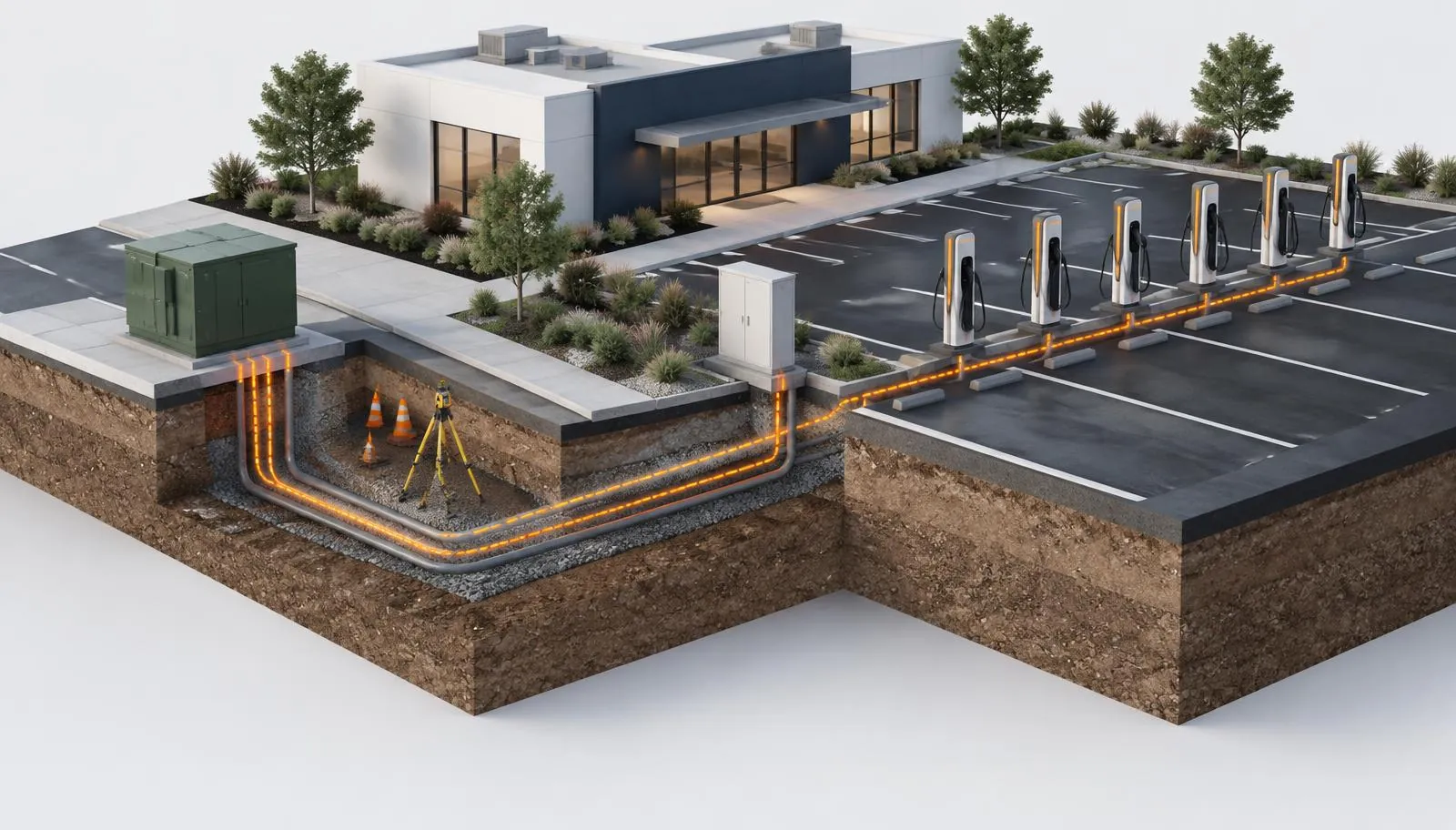
Between the switchboard and the chargers are feeders, distribution panels, conduit routes and equipment locations. Each needs an adequate rating, a practical path and the required working clearances. A long underground run, a crowded electrical room or a lack of wall space can shape the design as much as the calculation does.
Level 2 and DC fast charging have different needs
Level 2 chargers are commonly used where vehicles park for several hours, such as workplaces, apartments and hotels. DC fast chargers deliver much more power to each vehicle and are generally used where stops are short. They usually need substantially more electrical capacity and larger equipment, sometimes a dedicated service or transformer, and more site, structural and utility coordination.
Choose the charger type from how vehicles will use the site, then size the infrastructure around that choice.
Managed charging needs defined limits
Load management, or managed charging, can let more chargers share a defined amount of capacity. Whether a system can be relied on in the electrical design depends on the applicable code, the listed equipment and how the system is configured. A design that depends on it should state:
- The maximum load the system may draw, and where that limit is measured
- How power is shared when several vehicles charge at once
- What happens if communication, the network or a controller fails
- Who can change the settings, and what review is required before they do
The owner also needs to accept the operating trade-off: when many vehicles charge at once, each may charge more slowly. That should be a deliberate decision, not a surprise after installation.
Upgrade, phase or manage?
Once capacity is understood, most owners choose between three approaches or a combination: install the chargers that fit today, add load management to serve more spaces within the available capacity, or plan a service upgrade. Phasing can combine them: install conduit and reserve space now, then add chargers as demand grows.
No approach guarantees that an upgrade can be avoided. The right choice depends on the calculation, the utility’s response, the operating needs, and the owner’s budget and schedule.
Illustrative examples (not completed projects)
- Example A: An office building has eight empty breaker spaces, but demand data shows the service is already heavily loaded on summer afternoons. The empty spaces do not change the answer; the options are managed charging, a smaller first phase or a request to the utility.
- Example B: A retail center has ample service capacity, but the switchboard sits at the far end of the building from the parking. The feeder route, trenching and a new distribution panel near the parking may drive the design.
Owner intake checklist
- Property address and the name of the serving utility
- Existing electrical drawings, panel schedules and switchboard nameplate photos
- Twelve months of utility bills or interval demand data, if available
- A site plan with the proposed charging area and known underground utilities
- Intended users, typical parking duration and the number of chargers wanted now and later
- Preferred charger type (Level 2, DC fast or undecided) and whether managed charging is acceptable
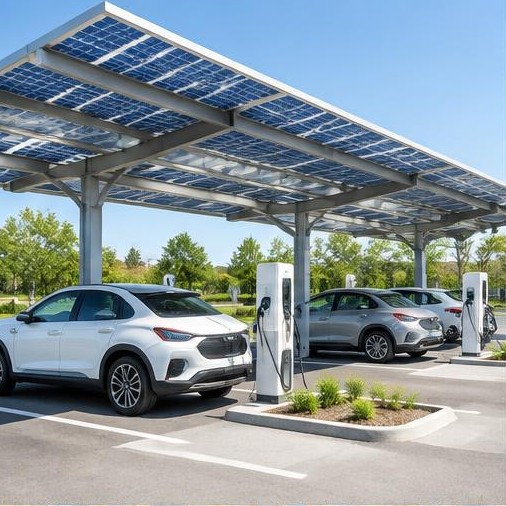
- Planned solar, storage, generator or building changes
Send this information through our contact page and we will identify what else a project-specific proposal needs. See our EV charging engineering services and What Delays an EV Charging Project? for next steps.
Frequently asked questions
Can I add chargers if my panel has empty spaces?
Not necessarily. Empty spaces show physical room, not available capacity. An engineer needs to check existing demand and the equipment upstream of the panel.
Does load management mean I never need a service upgrade?
No. It can help serve more chargers within the available capacity, but it has limits, and some sites still need more capacity from the utility.
Who decides whether the utility service can be increased?
The serving utility. Your engineer prepares load information and drawings; the utility determines what it can provide and what changes are needed on its side.
Sources and further reading
VizoDesign Engineering Team
Structural and MEP design for buildings and infrastructure nationwide. This article provides general educational information; project requirements must be checked against the applicable codes, jurisdiction and site conditions.